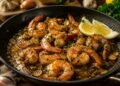


15-Minute Garlic Butter Shrimp Skillet
Shrimp are the only protein in a home kitchen that go from raw to ruined in the time it takes to answer a text message. That narrow window is exactly why this dish belongs in your regular rotation rather than your special-occasion file: once you understand that the shrimp need roughly three minutes of total heat and the sauce needs the pan to cool slightly before the butter goes in, the whole thing becomes a weeknight reflex.
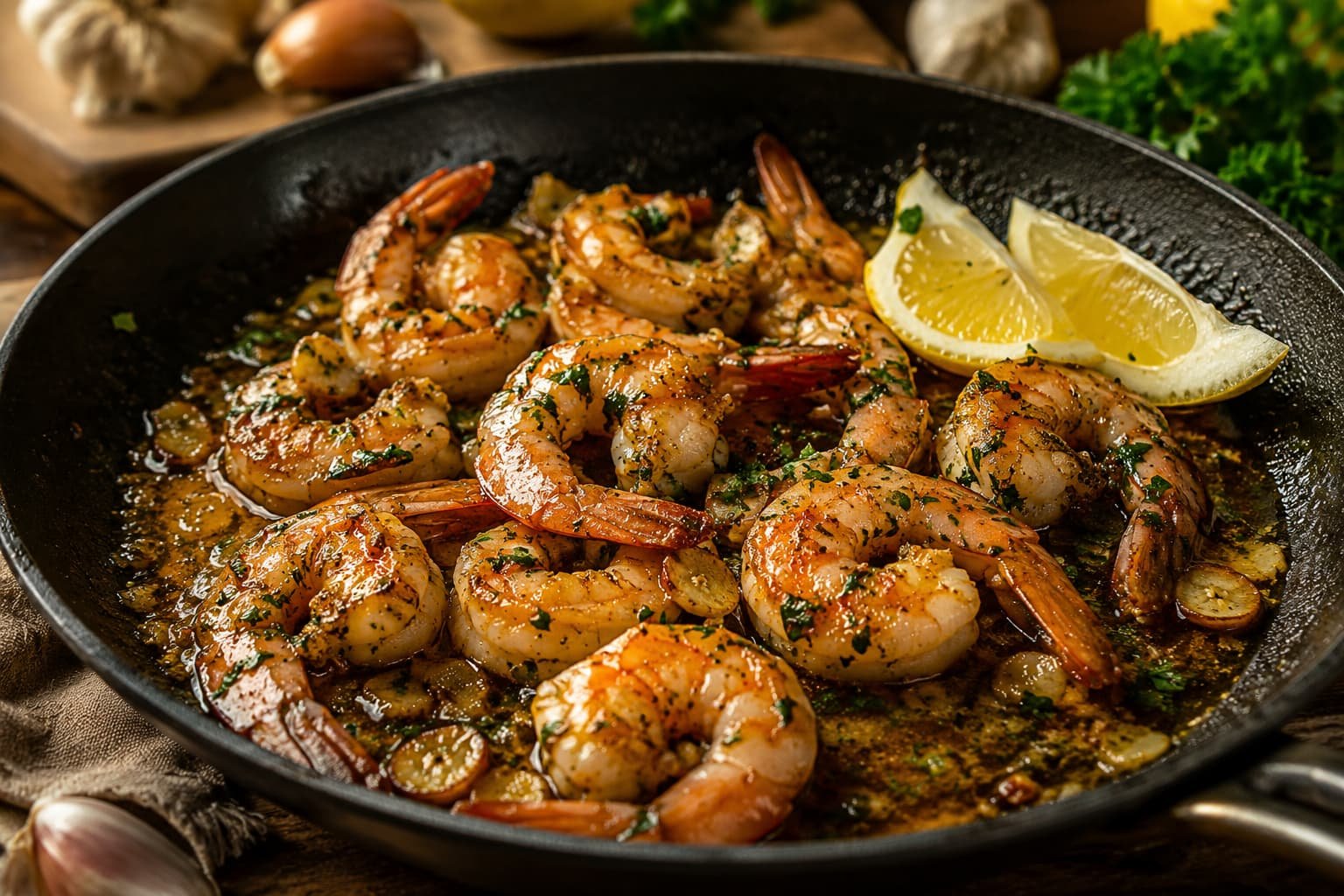
What lands on the plate is a shallow pool of glossy, faintly nutty garlic butter clinging to shrimp that snap rather than squeak, with the sharp lift of lemon cutting through the fat and parsley keeping it from tasting heavy. It reads like restaurant cooking because it uses a restaurant technique — building an emulsified pan sauce off the fond — and it takes fifteen minutes because there is almost nothing in it.
| Prep Time | Cook Time | Total Time | Serves |
|---|---|---|---|
| 5 minutes | 10 minutes | 15 minutes | 4 people |
Why This Recipe Works
The dish succeeds or fails on one piece of chemistry: butter is an emulsion of fat, water, and milk solids, and it breaks into greasy separation above roughly 160°F. If you drop cold butter into a screaming skillet, you get a slick of oil with garlic solids sitting in it. If you pull the pan off the burner, let it drop for fifteen seconds, then swirl in cold butter a piece at a time, the butter melts while staying emulsified and you get a sauce with body that coats the back of a spoon.
The second reason it works is the fond. Searing the shrimp in a thin film of oil over high heat leaves behind a faint amber film of caramelized proteins on the pan bottom. Lemon juice and a splash of shrimp-flavored liquid lift that film into the sauce, which is why this tastes deeper than the sum of butter, garlic, and lemon. Skip the sear and cook the shrimp gently in butter from the start and you lose that base entirely — the dish turns sweet and flat.
Third: sliced garlic instead of minced. Minced garlic has enormous surface area and scorches into bitterness in under thirty seconds at searing temperature. Thin slices hold together, sweeten as they poach in the butter, and give you actual pieces of soft garlic to eat. This is not a stylistic preference. Mincing is the single most common reason home versions of this dish taste acrid.
Ingredients
- 1½ pounds large shrimp (16/20 count), peeled and deveined, tails removed — The count matters more than the word “large,” which is unregulated. 16/20 means 16 to 20 shrimp per pound: big enough to stay juicy through a hard sear, small enough to cook through in the same time the outside browns. Anything smaller than 26/30 overcooks before it colors.
- 6 tablespoons cold unsalted butter, cut into 6 pieces — Cold and cubed is not fussiness; cold butter emulsifies into a sauce and warm butter slides toward breaking. Unsalted lets you control seasoning after the lemon goes in.
- 6 large garlic cloves, sliced thin — About 2 tablespoons sliced. Use a knife, not a press.
- 1 tablespoon neutral oil — Grapeseed, avocado, or refined canola. Olive oil smokes at the temperature this sear needs.
- 1 lemon — You want 2 tablespoons juice plus the zest. Zest before you cut it; zesting a spent half is miserable.
- ¼ cup low-sodium chicken or seafood stock — This is the deglazing liquid. Water works and loses about a quarter of the depth.
- ½ teaspoon red pepper flakes — Optional, but the heat sharpens the butter noticeably.
- 1¼ teaspoons kosher salt, divided — 1 teaspoon on the shrimp, the rest to adjust at the end.
- ¼ cup chopped flat-leaf parsley — Added off heat. Curly parsley is tougher and contributes texture you don’t want here.
On frozen shrimp: Buy them frozen unless you live near a working dock. Nearly all “fresh” shrimp at American supermarket counters were previously frozen and thawed for display, which means they have been sitting in their own moisture for a day or more. Frozen raw shrimp thawed at home under cold running water for eight minutes are firmer and cleaner-tasting.
How to Make It
- Dry the shrimp aggressively. Spread them on a clean kitchen towel, blot the tops, then let them sit uncovered for five minutes while you slice the garlic. Surface water is the enemy of a sear — a wet shrimp steams in its own moisture and turns pale grey instead of browning. Toss the dried shrimp with 1 teaspoon kosher salt.
- Heat a 12-inch skillet over medium-high for 2 minutes, then add the oil. Wait for the oil to thin out and just begin to shimmer, about 45 seconds. Steady wisps of smoke mean it’s too hot; pull it off for ten seconds.
- Sear the shrimp in a single layer, 90 seconds without touching them. If your skillet is smaller than 12 inches, work in two batches. Crowding drops the pan temperature and you get steamed shrimp. You want to hear a sustained sharp sizzle, not a soft hiss.
- Flip and cook 45 to 60 seconds more. The shrimp should be opaque at the edges with a thin band of translucence still visible at the thickest part. Pull them to a plate now — they will finish cooking in the sauce and on the plate.
- Drop the heat to medium-low and add the sliced garlic and pepper flakes to the empty pan. Stir constantly for 30 to 40 seconds, until the slices turn the pale gold of raw almond and smell sweet rather than raw. The instant you see brown edges, move to the next step.
- Pour in the stock and lemon juice, scraping the pan bottom with a wooden spoon to lift the fond. Let it reduce for about 60 seconds, until roughly 3 tablespoons of liquid remain and the bubbles have gone from wide and lazy to small and tight.
- Take the pan completely off the burner. Wait 15 seconds. This pause is the whole recipe. Then add the cold butter two pieces at a time, swirling the pan continuously and only adding more once the previous pieces have nearly vanished. It should take about 90 seconds and finish looking like thin cream, not melted butter with a separate layer.
- Return the shrimp to the pan along with any juices on the plate, add the lemon zest and parsley, and toss for 20 to 30 seconds off the heat until everything is coated. Taste, add the remaining salt as needed, and serve immediately.
The Technique That Defines This Dish
Everything else here is straightforward. Mounting the butter — the classic French monter au beurre — is the skill worth practicing, and it’s the reason a competent version of this dish and a genuinely good one look completely different in the pan.
The goal is a stable emulsion: butterfat suspended in the reduced pan liquid rather than floating on top of it. Three things make it hold. The butter must be cold, because cold butter releases its fat gradually as it warms, giving the emulsion time to form. The pan must be off direct heat and below about 140°F, which is roughly fifteen to twenty seconds after you lift a skillet off medium-low. And the swirling must be constant — motion is what disperses the fat into droplets small enough to stay suspended.
You will know it worked when the sauce turns slightly opaque and pale, clings to the shrimp instead of running off, and leaves a thin even film when you drag a spoon through it. You will know it broke when you see a clear yellow layer pooling at the edges with white solids underneath.
If it breaks, it is recoverable: pull the pan off heat entirely, add a teaspoon of cold water, and swirl hard. The water gives the emulsion something to re-form around. Two teaspoons is the limit before the sauce turns thin.
Practical Notes That Improve the Result
Use stainless steel or carbon steel, not nonstick. Nonstick surfaces are engineered to prevent exactly the protein adhesion that creates fond, so a nonstick pan gives you a sauce with no backbone. Cast iron sears beautifully but holds heat so stubbornly that it will keep the pan above emulsion temperature far longer than the fifteen-second rest allows for — if cast iron is what you have, rest it for a full minute off heat before the butter goes in.
Slice the garlic and chop the parsley before the pan ever gets hot. From step 5 onward there is no moment where you have thirty free seconds, and garlic burns while you are looking for the cutting board.
Season the shrimp right before they hit the pan, not thirty minutes ahead. Salt draws moisture to the surface, and moisture prevents browning. This is the opposite of how you would treat a steak, and it catches experienced cooks.
Hold back a quarter of the lemon juice until the end. Lemons vary enough in acidity that a fixed quantity is a guess — taste the finished sauce and adjust. If it tastes rich but slightly dull, it needs acid, not salt.
Where Home Versions Go Wrong
Rubbery shrimp. The cause is almost never the recipe’s timing; it’s cooking them fully in the pan and then returning them to a hot sauce. Shrimp carry over. Pull them while a sliver of translucence remains at the center. A properly cooked shrimp curls into a loose C; one curled into a tight O is overdone.
Bitter, acrid garlic. Either it was minced, or it went into the pan while the skillet was still at searing heat. Drop the heat before the garlic goes in, every time.
A greasy, separated sauce. The butter went in over direct heat or the butter was soft. Both are fixable with the water trick above, but the fifteen-second pause prevents it entirely.
Watery sauce with no cling. The stock and lemon weren’t reduced far enough before the butter. You need the liquid down to about 3 tablespoons; if it looks like a puddle rather than a slick, keep reducing.
Pale, steamed shrimp. The pan was crowded or the shrimp were wet. A 12-inch skillet holds 1½ pounds of 16/20 shrimp in one layer with a little room. Anything tighter, cook in two batches — the extra ninety seconds is worth it.
Variations Worth Making
Brown butter version. Before you start, melt 4 tablespoons of the butter in the skillet over medium until the milk solids turn deep amber and it smells like toasted hazelnut, about 4 minutes. Pour it off and reserve, wipe the pan, and proceed with the recipe, using the browned butter plus 2 tablespoons cold butter for the mount. It adds a nutty depth that suits colder months. Note that browned butter emulsifies less readily than fresh, so the cold butter at the end is not optional here.
Tomato and caper. Add 1 cup halved cherry tomatoes and 2 tablespoons drained capers with the stock and let them collapse slightly during the reduction. The tomatoes contribute pectin, which makes the sauce noticeably more forgiving — this is the version to make if the emulsion has broken on you before.
Coconut-lime. Replace the stock with ¼ cup full-fat coconut milk and the lemon with lime, and finish with cilantro instead of parsley. Reduce the coconut milk only briefly, about 30 seconds, and cut the butter to 4 tablespoons since the coconut fat is doing part of the work.
Scallops instead of shrimp. Use 1½ pounds dry-packed scallops, seared 2 minutes on the first side and 60 seconds on the second. Ask for dry-packed specifically; wet-packed scallops are treated with a phosphate solution and will release enough liquid to make searing impossible.
How to Serve It
The sauce is the reason to make this, so serve it with something that will absorb it. Crusty bread with an open crumb is the best option and the one I’d choose nine times out of ten — a torn piece of sourdough dragged through the pan is the whole point. Angel hair or linguine tossed directly into the skillet works too, though you’ll want to increase the butter to 8 tablespoons and reserve a few tablespoons of pasta water to stretch the sauce.
For a lower-carb plate, spoon it over sautéed spinach or thin zucchini ribbons, but salt and drain the zucchini for ten minutes first and pat it dry, or it will release water and thin your sauce on the plate.
Skip rice unless it’s a firm long-grain. Short-grain and jasmine turn gluey against a butter sauce.
Serve it in the skillet at the table if the pan is presentable. Plated individually, the sauce spreads thin and cools within two minutes; in the pan it stays pooled and warm.
Storage and Reheating
This is a dish to cook and eat, and I would not plan on leftovers. Refrigerated in an airtight container, it keeps 2 days, but two things degrade: the shrimp firm up as their proteins continue to contract in the cold, and the emulsified sauce separates as the butterfat solidifies.
Both are partly recoverable. Reheat in a skillet over low heat with 1 tablespoon of water, swirling gently until the sauce comes back together, about 2 minutes. Stop the moment the shrimp are warm — they are already fully cooked, and a second round of real heat is what makes reheated shrimp tough. Never use a microwave for this; it heats the shrimp faster than the sauce and you end up with rubber in broken butter.
Do not freeze it. The sauce will not re-emulsify after freezing, and previously frozen shrimp that are cooked and frozen again lose most of their texture.
Approximate Nutrition Per Serving
| Calories | Protein | Carbs | Fat | Fiber |
|---|---|---|---|---|
| 378 kcal | 35 g | 4 g | 25 g | 1 g |
All values are approximate estimates provided for informational purposes only. Actual figures vary with ingredient brands, shrimp size, and portion.
A Final Word
Fifteen minutes buys you a great deal here, but only because the recipe asks you to be precise about two moments: when the shrimp leave the pan and when the butter goes in. Learn those, and you have a pan sauce technique that will serve you for the rest of your cooking life, well past this dish.
Make it once with a timer and a thermometer if you have one. After that you will do it by sound and sight, on a weeknight, without thinking about it.