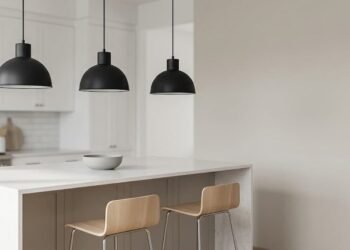


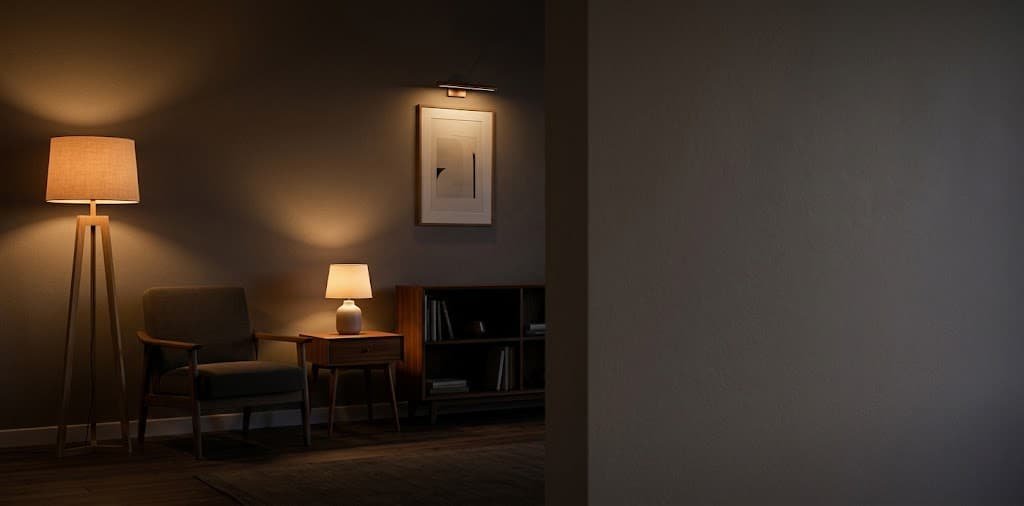
Walk into almost any room lit by a single overhead fixture and something feels flat before you can name it — faces lit unflatteringly from above, corners falling into shadow, the whole space reading as functional rather than considered. Now walk into the same room with three or four smaller light sources at different heights instead of one bright one overhead, and it feels like an entirely different space, even though nothing structural has changed.
This is the difference layered lighting makes, and it is achievable in almost any room using plug-in lamps and fixtures alone, without any rewiring or electrical work — this guide covers exactly that approach. The transformation is genuinely available to a renter or anyone unwilling to touch existing wiring.
What’s Actually Going On With Bad Lighting
A single overhead source is the default in most homes because it is the cheapest thing to install during construction, not because it is the best way to light a room for how people actually use it. Overhead-only lighting creates one direction of light and one intensity throughout the room, which produces flat, shadowless faces directly beneath it and increasingly dim, undefined corners the further you get from it.
Layered lighting solves this by combining three distinct types of light — ambient, task, and accent — each doing a different job, so the room has depth and the light responds to what is actually happening in different parts of the space rather than applying one blanket solution everywhere. None of the three layers requires touching the room’s existing wiring to add.
The Three Layers, Explained Plainly
- Ambient light is the general, overall illumination that lets you move safely through a room and see the space as a whole — typically the room’s main source, whether that is an overhead fixture, a torchiere floor lamp bounced off the ceiling, or several smaller sources combined.
- Task light is focused, brighter light aimed at a specific activity — reading, cooking prep, working at a desk — positioned close to where that activity actually happens rather than relying on the room’s general ambient light to be bright enough at that one spot.
- Accent light is the smallest and most decorative layer, used to highlight a specific object, texture, or architectural feature — a piece of art, a bookshelf, a textured wall — and it does the least practical work but contributes the most to a room feeling genuinely composed rather than merely lit.
How to Build the Three Layers in a Room You Already Have
- Identify what ambient light already exists in the room — the main overhead fixture, if there is one — and treat it as the baseline layer rather than the room’s only source. Its job in a layered scheme is simply to provide safe, general visibility, not to carry the whole room’s mood on its own.
- Add one or two plug-in floor or table lamps positioned to soften the room’s overall light, ideally at seated eye level or below, since light coming from a lower height reads as considerably warmer and more relaxed than the same brightness coming from directly overhead.
- Identify every activity zone in the room — reading chair, desk, kitchen counter — and add a dedicated task light at each one, positioned close enough that it genuinely brightens the work surface rather than the general area around it.
- Choose one or two features worth highlighting — art, a textured wall, an interesting object — and add a small accent light aimed specifically at that feature, using a plug-in picture light, a small directional lamp, or a battery-powered puck light where no outlet is convenient.
- Use warm-toned bulbs, roughly 2700 to 3000 Kelvin, across ambient and task layers for a residential room, reserving cooler, whiter light closer to 4000 Kelvin for spaces genuinely needing more clinical brightness, like a home office desk lamp specifically used for detailed work.
- Turn on only the ambient layer at night and evaluate what still feels underlit or flat — those specific spots are exactly where the task and accent layers you just added need to do their work, and this simple test confirms the layering is actually solving the original problem.
The Ratio That Actually Matters
The relationship between the three layers matters more than the exact number or type of fixtures used — a room with strong ambient light and nothing else still reads as flat no matter how bright it is, while a room with modest ambient light balanced by genuine task and accent layers reads as considerably richer even at a lower total brightness.
A useful starting ratio treats ambient light as the quietest layer rather than the dominant one — bright enough for safe general movement, but deliberately not bright enough to eliminate the need for task and accent light elsewhere in the room. This is the opposite of how most rooms are actually lit by default, where the overhead ambient fixture is pushed to maximum brightness specifically because it is the only source doing any work.
Getting this ratio right is why a room lit with three or four modest 40-watt-equivalent sources at different heights and functions consistently reads as more considered and more comfortable than the same room lit by one bright 100-watt-equivalent overhead fixture, even though the second option is measurably brighter overall. The comfort comes from the layering itself, not from any single fixture’s individual brightness.
Practical Notes
Plug-in dimmer switches, which sit inline on a lamp’s cord without requiring any wiring, let a single fixture serve double duty as both a brighter task light and a softer ambient source depending on the time of day and activity.
Group floor and table lamps at varying heights rather than uniform ones — a floor lamp, a table lamp, and a smaller accent light at three different heights in the same seating area creates more visual depth than three lamps of identical height, even using the same total number of fixtures.
Battery-powered puck or strip lights, now widely available and genuinely bright enough for accent purposes, solve the accent-lighting problem in spots with no nearby outlet, without requiring any electrical work at all.
Common Mistakes to Avoid
Relying entirely on one bright overhead source and calling it done is the most common mistake, and it is precisely the default this whole guide exists to move past — one source, however bright, cannot do the job of three layers working together.
Using the same bright, cool-toned bulb across every layer is the second common mistake — task light genuinely benefits from being a bit brighter and cooler than ambient light for visibility during focused work, but applying that same intensity to the ambient and accent layers erases the contrast that makes layering feel intentional rather than uniform.
Adding task and accent lighting without actually turning off the overhead ambient light to test the effect is the third — the whole point of the layers is that they can work independently depending on mood and activity, and never actually testing them independently means never discovering whether the layering is doing its job.
Where to Invest
At the budget tier, one or two modestly priced plug-in floor or table lamps and a change in bulb temperature to a warmer tone deliver a genuinely noticeable improvement over single-source overhead lighting, at minimal cost.
At the mid-range tier, dedicated task lighting at every real activity zone plus at least one accent light for a favorite feature rounds out all three layers properly, and this is the tier where a room typically starts to feel genuinely composed rather than simply improved.
At the higher-investment tier, designer fixtures with built-in dimming, smart bulbs allowing scene presets for different times of day, and multiple accent points throughout a room create a space that can shift its entire mood with one control, without ever requiring new wiring.
Adjusting for Your Specific Room
In a rental where fixed overhead fixtures cannot be changed, lean almost entirely on plug-in lamps for all three layers, and consider a torchiere floor lamp bounced off the ceiling as a flexible ambient source that can be added or removed without touching the existing fixture at all.
In a room genuinely used for focused work — a home office, a craft space — weight the task layer more heavily than the accent layer, since the practical need for well-lit close work matters more here than the decorative polish accent lighting provides.
In a room primarily used in the evening for relaxing rather than working, weight ambient and accent light more heavily than task light, and keep every bulb in the warmer temperature range throughout, since a room meant for winding down benefits from consistently soft light rather than any bright, cooler-toned source breaking the mood.
Living With It
Reassess the layering seasonally, since a room that felt adequately lit during long summer days often needs its ambient and task layers reinforced once natural daylight hours shorten considerably.
Swap bulbs to a consistent temperature across all fixtures if they were purchased at different times, since mismatched color temperatures within the same room — one warm bulb next to one cooler one — undoes much of the cohesive effect layering is meant to create.
Where to Start
The honest case here is specific: three modest, well-placed light sources at different heights and functions consistently outperform one bright overhead fixture, and the entire shift is achievable with plug-in lamps alone, no rewiring required.
Turn off your room’s main overhead light tonight and notice exactly which corners and activities go dark. Those specific gaps are your shopping list for the first task and accent lamps to add, and every item on that list is a lamp you plug in, not a wire you touch.