

A dining table can be beautifully made, finished in a wood tone that suits the room perfectly, and still be the wrong table — because nobody measured how much space each chair actually needs to pull back and let a person sit down. This single calculation, almost never mentioned in a showroom, is the most common reason a dining table that looked right in the store feels cramped or awkward the first time a full household sits down to eat around it.
This is a guide built around getting that math right first, since it determines whether a table actually functions for the number of people you intend to seat, before getting into the material and construction details that determine how well it holds up over time. Both matter, but only one of them gets checked in a showroom by default.
Why the Clearance Math Matters More Than the Table Itself
A table’s listed dimensions describe the tabletop, not the functional space the table actually occupies once chairs, walking room, and the act of sitting down are factored in. A rectangular table that fits a room’s square footage on paper can still leave no room for anyone to actually pull a chair out and sit comfortably, particularly against a wall or in a room shared with other furniture.
The standard clearance a person needs to comfortably push back a chair, stand, and walk behind someone already seated is roughly 36 to 44 inches from the table edge to the nearest wall or obstacle. This number is almost never printed on a table’s product listing, and it is the single most common gap between how a table looks measured against a room’s total square footage and how it actually feels once real people and chairs are in the space. A table that reads as generously sized on a floor plan can still leave guests squeezed against a wall the moment everyone actually sits down.
What You’ll Need to Shop Properly
- The exact measurements of your dining space, including the distance from where the table will sit to the nearest wall, doorway, or piece of furniture on every side.
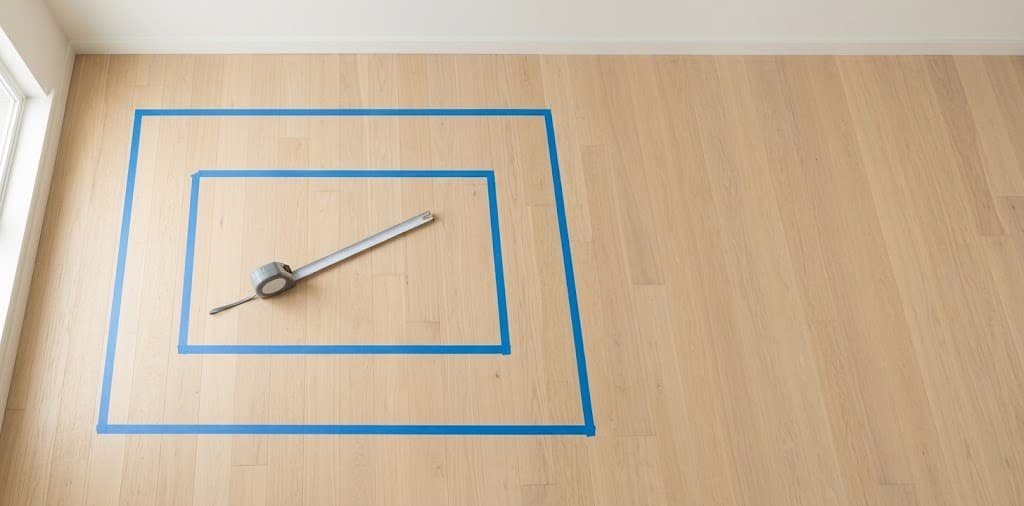
- Painter’s tape to mark out the table’s actual footprint on the floor, including estimated chair pull-out space, before buying anything — this single step catches a table that will not actually work before it is too late to return easily.
- A clear number for how many people you need to seat regularly, distinct from how many you might seat occasionally for a holiday, since these are genuinely different sizing questions covered in the adjusting section.
How to Evaluate a Table, Step by Step
- Measure your dining space and mark the table’s footprint plus 36 to 44 inches of clearance on every side where a chair will be pulled out, using painter’s tape on the actual floor. If this marked-out space does not comfortably fit within your room, no table that matches those dimensions will work regardless of how it looks in a showroom.
- Allow roughly 24 inches of table width per seated person, as a comfortable minimum — tighter spacing works for an occasional large gathering but feels cramped for regular daily use.
- Ask specifically what the tabletop is made of — solid wood, wood veneer over a stable core, or engineered wood with a printed finish. Genuine wood veneer over a quality core is a legitimate, durable choice, not an inferior shortcut; a printed laminate finish is a different and less durable thing entirely, and the distinction is not always obvious without asking directly.
- Check the finish type and what it is actually rated to withstand — a polyurethane or lacquer finish resists water rings and heat better than an oil finish, which looks and feels more natural but requires more careful use and periodic reapplication to stay protected.
- If the table extends, physically operate the extension mechanism in the showroom rather than taking it on faith. A mechanism that feels stiff or uneven when new is unlikely to improve with age, and this is one of the more common sources of long-term frustration with an otherwise well-chosen table.
- Sit at the table if a floor model is available, checking that your knees clear the apron — the structural frame beneath the tabletop — comfortably. A beautiful table with a deep apron can make sitting close to the table genuinely uncomfortable regardless of how the rest of the piece is built.
The Detail That Actually Decides This
The clearance math from Section 2, applied specifically before falling in love with any particular table’s look, is what determines whether a table works in your actual room or becomes a beautiful piece you regret within the first month of real use.
This is the step buyers skip most often, because it requires doing arithmetic before shopping rather than during the more enjoyable part of choosing a finish or a shape. A table purchased based on room square footage alone, without accounting for chair clearance specifically, is the single most common reason people end up with a table that technically fits the room but functionally does not work — chairs that cannot push back far enough, a walkway behind seated guests that requires everyone to stand and shuffle sideways, or a leaf that cannot be added because there is nowhere for the extended table to actually go.
Marking the full footprint with tape before buying, as described in step one, turns this abstract calculation into something you can physically see and walk around, which catches the mismatch before it becomes an expensive mistake rather than after delivery.
Practical Notes
A table with a slightly smaller footprint than the room technically allows generally lives better day to day than one sized to the absolute maximum the room permits, since daily life needs walking room around the table even when nobody is eating.
Round or oval tables in a tighter room often provide more usable clearance than a rectangular table of similar seating capacity, since there are no hard corners to navigate around when pulling out a chair or walking past.
A table pad or a set of coasters used consistently protects even a well-finished tabletop from the specific combination of heat and moisture that causes the most common visible damage over years of daily use, regardless of how good the original finish was.
Common Mistakes to Avoid
Skipping the clearance calculation and buying based on room square footage alone is the most common and most consequential mistake, covered in depth above — it is worth repeating because it is the single largest gap between a table that looks right in a showroom and one that actually works at home.
Assuming veneer construction is automatically lower quality than solid wood is the second common mistake — a well-made veneer over an engineered core is often more dimensionally stable than solid wood, which expands and contracts with humidity, and dismissing veneer outright sometimes means passing on a genuinely well-built and more stable table.
Not testing the extension mechanism before purchase is the third — a stiff or misaligned leaf insertion mechanism discovered only at home, during an actual gathering, is a frustrating and entirely avoidable problem that a thirty-second test in the showroom would have caught.
Where to Invest
At the budget tier, a well-made engineered wood or quality veneer table with a durable polyurethane finish delivers genuine daily durability, particularly for a household with children where finish resilience matters more than material prestige.
At the mid-range tier, solid wood construction with a reinforced apron and a smoothly operating extension mechanism becomes worth prioritizing, especially for a table expected to see daily heavy use and occasional larger gatherings that require the leaf.
At the higher-investment tier, hand-finished solid hardwood with traditional joinery represents the most durable option available, worth it specifically for a table intended as a long-term centerpiece piece expected to last decades and potentially be passed down rather than replaced.
Adjusting for Your Household
If you seat a larger number of people only occasionally — holidays, infrequent gatherings — prioritize a table with a genuinely well-functioning extension mechanism over one sized permanently for the largest occasional group, since a table permanently sized for twelve dominates a room every single day for the sake of a handful of occasions per year.
With young children regularly at the table, prioritize finish durability and a rounded rather than sharp table edge over material prestige, since daily spills and impacts matter more in this household than in one without small children navigating the space.
In a room that doubles as a workspace or hobby area outside mealtimes, prioritize a finish genuinely resistant to scratches and heat over a delicate natural oil finish, since the table is absorbing more varied daily use than a purely dedicated dining space would see.
Keeping It in Good Condition
Reapply oil finish on the manufacturer’s recommended schedule if your table has one, since oil finishes genuinely do require this maintenance to keep protecting the wood, unlike a polyurethane finish that holds up without periodic reapplication.
Check the extension mechanism periodically even if it is not in regular use, since hardware that sits unused for long stretches sometimes needs a light adjustment or lubrication before it operates as smoothly as it did when new.
Where to Start
The honest case here is specific: the clearance math determines whether a table actually functions in your room, and it has to be checked before falling for a particular look or finish, not after.
Measure your space and mark the full footprint with tape, including chair clearance, before shopping for anything. That single step, done first, prevents the most common and most expensive mistake in buying a dining table, and it costs nothing but a roll of tape and twenty minutes.