

Put a warm honey-toned oak table next to a cool grey-washed dresser and something feels quietly wrong before you can articulate what it is. Put that same honey oak table next to a slightly different but still warm walnut piece, and the room reads as intentional even though the two woods are clearly not the same species or finish. The actual wood tone matters less than most people assume. What matters is the undertone underneath it.
This is a guide built around that distinction — matching undertone rather than matching exact wood color, since undertone is the thing your eye actually registers as clashing or working, whether or not you consciously notice it. Once you know how to read it, the whole question of “does this wood go with that wood” stops being a guess.
Why Undertone Matters More Than Exact Tone
Every wood tone, regardless of how light or dark it is, carries an underlying warm or cool cast — warm woods lean toward red, orange, or yellow undertones, while cool woods lean toward grey, ash, or slightly pink-toned undertones. Two pieces can be nearly identical in overall lightness and still clash badly if one is warm-toned and the other cool-toned, because the eye is far more sensitive to that underlying cast than to the actual depth of color.
This is also why the old advice to “match your wood tones” throughout a room produces a flat, showroom-catalog look rather than a considered one — genuine intentional rooms mix several different wood tones within the same undertone family, and that variation within a consistent undertone is what reads as curated rather than accidental. A room where every wood surface is the exact same shade looks like it was furnished from a single catalog page, not lived into over time.
What You’ll Need to Get This Right
- A sample of your room’s largest or most dominant wood piece — flooring, a large table, a media console — since this piece typically sets the undertone the rest of the room needs to work with, whether or not you deliberately chose it that way.
- Natural daylight to evaluate wood samples in, since artificial lighting, particularly warm-toned bulbs, can make a genuinely cool-toned wood appear warmer than it actually is and lead to a mismatched purchase.
- A willingness to bring a small sample or photo of an existing piece when shopping for a new one, rather than relying on memory or a general sense of “medium brown,” which is rarely precise enough to predict undertone compatibility.
How to Mix Wood Tones, Step by Step
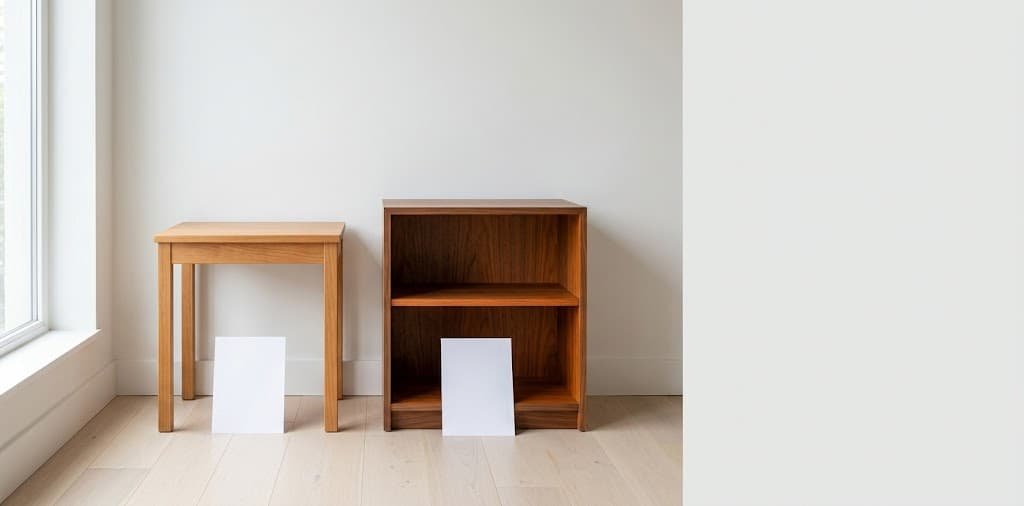
- Identify your room’s dominant wood piece — usually the flooring or the largest furniture item — and determine its undertone in natural daylight. Hold it next to a plain white sheet of paper; a genuinely warm wood will look distinctly yellow or orange against the white, while a cool wood will look more grey or muted by comparison.
- Treat that dominant piece’s undertone as the fixed anchor for the room. Every other wood piece introduced afterward should share that same warm or cool family, even if the actual depth of color varies considerably.
- Select secondary wood pieces that vary in tone depth but match the anchor’s undertone. A warm-anchored room can mix a light honey oak side table with a deep warm walnut bookshelf successfully, because both share the same warm undertone despite being very different overall colors.
- Limit genuinely different wood tones to two or three distinct pieces per room, even within the same undertone family. Beyond that, even undertone-matched wood starts to compete for visual attention rather than reading as a considered mix.
- Use non-wood materials — metal, stone, upholstery — to create visual breaks between wood pieces that sit close together, since two different wood tones placed directly adjacent read as more jarring than the same two pieces with a non-wood material breaking up the transition between them.
- Step back and view the room as a whole from its main entry point, since undertone mismatches are often more obvious from a full-room view than when evaluating pieces one at a time up close.
The Detail That Actually Decides This
Undertone family, not overall lightness or darkness, is the single variable that determines whether mixed wood tones read as intentional or accidental — and it is the detail most people evaluate incorrectly, if they evaluate it at all.
The common instinct when choosing a new wood piece is to hold it next to an existing one and ask “is this close enough in color,” which is the wrong question, since two pieces of nearly identical lightness can still clash badly if their undertones differ. The right question is whether the new piece leans the same direction — warm or cool — as the anchor piece, regardless of how much lighter or darker it is. A pale cool-grey wood and a deep cool-toned walnut with grey undertones work together far more successfully than two medium-toned woods where one leans warm and the other leans cool, even though the medium-toned pair looks closer in color at first glance.
This is why bringing a physical sample when shopping matters more than trying to remember or approximate a color from memory — undertone is subtle enough that it is genuinely difficult to judge accurately without a direct side-by-side comparison in consistent lighting.
Practical Notes
Painted or stained wood pieces can be shifted toward a different undertone with refinishing, which is worth considering for one problem piece rather than replacing it entirely, if everything else in a room shares an undertone that one specific item does not match.
Wood flooring is the hardest anchor to change and the easiest to overlook when evaluating undertone, since it is underfoot rather than at eye level — walk through the room specifically checking furniture against the floor’s undertone, not just furniture pieces against each other.
Undertones can shift subtly under different light temperatures throughout the day, so evaluate a genuinely important pairing at more than one time of day before committing, particularly in a room that gets strong direct sunlight at some point.
Common Mistakes to Avoid
Matching wood tones by memory rather than direct comparison is the most common mistake — “medium brown” covers an enormous range of actual undertones, and two pieces both loosely described that way can clash noticeably once placed side by side in the same room.
Assuming that lighter and darker versions of the same undertone will automatically look mismatched simply because of the contrast in depth is the second common mistake — this contrast is exactly what makes a mixed-wood room read as intentional rather than flat, provided the undertone itself is consistent.
Introducing more than a few genuinely distinct wood tones into one room, even within a matched undertone family, is the third — undertone matching prevents clashing, but it does not remove the practical limit on how many distinct wood pieces a single room can hold before it starts to feel visually busy regardless of how well they theoretically coordinate.
Where to Invest
At the budget tier, focus entirely on getting the undertone right with pieces you already own or can source secondhand, since undertone coordination costs nothing beyond the attention it takes to evaluate pieces correctly before buying anything new.
At the mid-range tier, a genuinely well-matched anchor piece — a dining table or media console in a wood tone that suits the room’s existing flooring undertone — is worth prioritizing over several smaller accent pieces, since the largest pieces do the most visual work in establishing whether the room reads as coordinated.
At the higher-investment tier, custom staining or refinishing an existing piece to shift its undertone precisely, rather than replacing it, solves a stubborn mismatch without starting over on furniture that is otherwise in good condition and worth keeping.
Adjusting for Your Specific Room
In a room with cool-toned wood flooring already installed and difficult to change, treat the floor as the fixed anchor and select all furniture to match its cool undertone, even if your personal preference leans toward warmer wood tones generally — fighting the floor’s undertone with warm furniture is a losing and expensive battle.
In a room built gradually over years with pieces acquired at different times, audit the existing collection for undertone first before buying anything new, since it is often more cost-effective to identify and address the one mismatched piece than to assume the whole collection needs reconsidering.
In a room with abundant natural light, undertone differences show up more visibly than in a dimly lit room, which means the coordination described throughout this guide matters more in a bright room than in one relying mostly on artificial lighting.
Keeping It Working
Reevaluate undertone coordination whenever adding a genuinely new wood piece, rather than assuming a past successful mix means any future addition will automatically work — each new piece is a fresh test against the established anchor, not an automatic pass.
Revisit the room’s overall wood balance occasionally as pieces get replaced over time, since a room that started with a clear undertone anchor can drift as individual pieces are swapped out one at a time without checking each replacement against the original anchor.
Where to Start
The honest case here is specific: matching undertone, not matching exact wood color, is what makes a room with several different wood tones read as intentional rather than accidental — and that single distinction resolves most of the uncertainty people feel when mixing wood in a room.
Take your room’s dominant wood piece into natural daylight and hold it against white paper to identify its true undertone. That one check, done before any new purchase, prevents most of the mismatches this guide addresses, and it takes less time than a single trip to a furniture showroom.